A Small Review Ritual for the End of a Workshop
A small review ritual for the end of a workshop turns one useful idea, one open question and one return date into a practical bridge to later use.

The common mistake at the end of a workshop is to spend the last minutes packing up, thanking the facilitator and promising to revisit the material later. That promise has no place in a calendar, so it competes poorly with everything that does. A small review ritual for the end of a workshop gives each participant a short record of what mattered, what remains unclear and when the material should come back into view.
The ritual is not a miniature evaluation form or a final test. It is a handover from the shared session to the participant’s own work. The useful idea names something worth carrying forward; the unresolved question keeps uncertainty visible; the next occasion gives the material a future address. There are several ways to arrange those three parts, and the right one depends on whether the workshop is individual, collaborative or likely to lead straight into a task.
Three parts, one handover
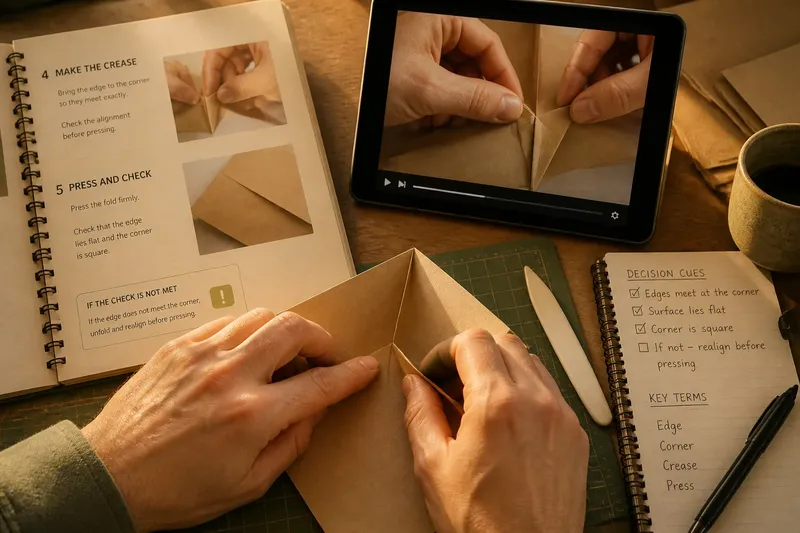
Keep the record deliberately small. Ask each person to write one useful idea in their own words, one unresolved question, and one specific occasion on which they will revisit the material. The occasion might be a planned meeting, the next time they open a particular document, or the start of a related task. “Later” is not an occasion; it is a polite fog.
The useful idea should be more than a topic label. “Feedback” says what the session covered, not what the participant might use. “I can make a comment more actionable by naming the next decision” records a usable distinction. The point is not to produce elegant prose. A plain sentence that still makes sense after the workshop is enough.
The question should remain open if it is genuinely unresolved. It may concern a boundary, an exception or a practical detail that the session could not settle. Writing it down makes it easier to seek an answer later, and prevents uncertainty from being mistaken for a personal failure to pay attention. The next occasion then connects the note to an actual moment of work, rather than to an optimistic mood.
Private written notes
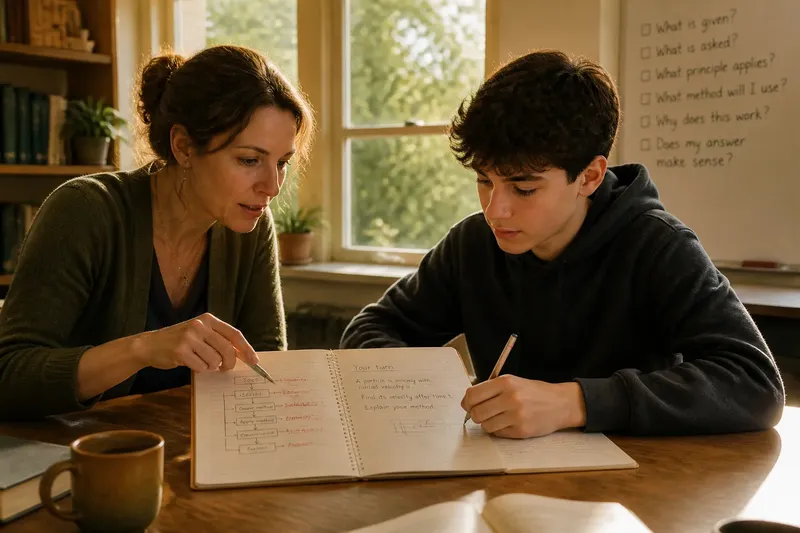
In the private version, participants write the three parts for themselves, on paper or in a personal digital note. The facilitator gives a clear prompt, allows a quiet pause, and does not ask everyone to read their answers aloud. This suits workshops where the material is personal, the group is large, or participants need to decide for themselves what is relevant.
Private notes also make it easier to record an honest question. A participant may be unsure about a basic term, may disagree with an example, or may not yet know how the idea applies to their role. None of those belongs automatically in a public round. Keeping the record private protects the difference between reflection and performance.
Its weakness is that a note can disappear into a notebook or an unvisited folder. The ritual should therefore include a small filing decision: place the note where the future occasion will happen. That could mean adding a reminder beside a project document, saving the note with workshop materials, or writing the return date in a calendar entry. The storage choice should take seconds, not become a second activity.
Shared closing round
A shared round invites participants to say one of their three entries aloud, usually the useful idea or the occasion for returning to it. This suits a small group that has worked on a common task and would benefit from hearing how others intend to use the material. It can also help the facilitator notice recurring questions that need a later answer.
Do not require all three entries to be spoken. Publicly sharing every question can turn a quiet record into an assessment of confidence, and a long round can consume the time meant for the routine. Let participants pass, and avoid correcting their wording unless they ask. The purpose is to make the handover visible, not to polish each person’s thought in front of an audience.
A shared round works best when the facilitator records questions that belong to the group and names how they will be handled. That might mean adding them to a follow-up note or bringing them to the next session. Do not imply that every question will receive an immediate answer. A visible unresolved item is more useful than a hurried answer offered merely to clear the board.
Task-linked return notes
The third option ties the ritual directly to an upcoming piece of work. Participants write the useful idea and question beside the relevant task, then name the moment when they will look again: before drafting, during a planning conversation, or when reviewing a colleague’s work. This suits workshops whose content will be used soon and where participants can identify a real point of return.
Task-linked notes make the “next occasion” concrete, but they can be awkward when no related task is in sight. In that case, do not invent one just to complete the form. Use a reasonable calendar cue, such as the next team discussion about the subject, or choose the private-note approach and let the question remain open. A ritual should fit the work, not manufacture work for the ritual.
Say a workshop has focused on writing clearer project briefs, and a participant is due to prepare one for a planning meeting. They might record, “Name the decision this brief needs to support”; leave the question, “How much background does a new team member need?”; and choose “when I open the draft before the planning meeting” as the return occasion. The note sits with the draft, where the idea can inform a real choice and the question can be checked against the audience.
Which format fits?
Choose private notes when candour matters more than group visibility. Choose a shared round when participants have common work and hearing one another’s intended use will help. Choose a task-linked note when an identifiable task is approaching. These are arrangements for the same three-part record, not competing theories of learning.
If the group contains different roles, offer a choice rather than assuming one format suits everyone. A facilitator can give the prompt to all, then let each person write privately, share one entry, or attach the note to a task. Keep the choice simple. Several pages of format instructions would be a memorable way to make a short ritual feel long.
Before ending the session, check that each participant has a useful idea stated in their own words, a question that has not been silently erased, and a named occasion for returning. If someone cannot identify a future task, a calendar cue is enough. If the question is shared and relevant to the group, note who will carry it forward and where an answer can be added.
Questions about the ritual?
How long should the review take?
Keep it short enough to fit the closing portion of the session, with a quiet pause for writing and only a brief invitation to share. The exact time depends on the group and the complexity of the material; the three entries matter more than a fixed duration.
Should participants keep the note?
Yes, if they can place it somewhere connected to the occasion they named. A personal notebook, a project file or a calendar entry can all work; the best location is the one they will encounter naturally.
What if a question has no answer yet?
Leave it unresolved and identify a sensible next move, such as asking a colleague or bringing it to a later discussion. The note is useful precisely because it distinguishes an open question from material that has already been settled.
Should the facilitator collect the responses?
Only when there is a clear purpose, such as identifying shared questions for follow-up. Otherwise, participants can keep their own notes, which avoids turning a personal review into an unsolicited evaluation form.
Keep the ritual modest
It is not worth designing elaborate cards, colour-coded categories or a scoring system for a record with three entries. A plain sheet, a shared digital document or a note in the relevant work file is usually enough. The facilitator’s preparation should go into a precise prompt and a credible return occasion, not decorative stationery with a demanding future.
For a small review ritual for the end of a workshop to work as intended, the final note must belong to the participant and meet them again in a recognisable place. Close by giving everyone a moment to choose that place and occasion. Then let them leave with one idea to use, one question still worth asking, and a clear cue to return to the material.